10 Best i-Run Products Compared for Running, Trail & Training in 2026
Our i-Run 10Best guide compares road shoes, trail shoes, GPS watches and open-ear audio so you can choose the right running gear in July 2026.
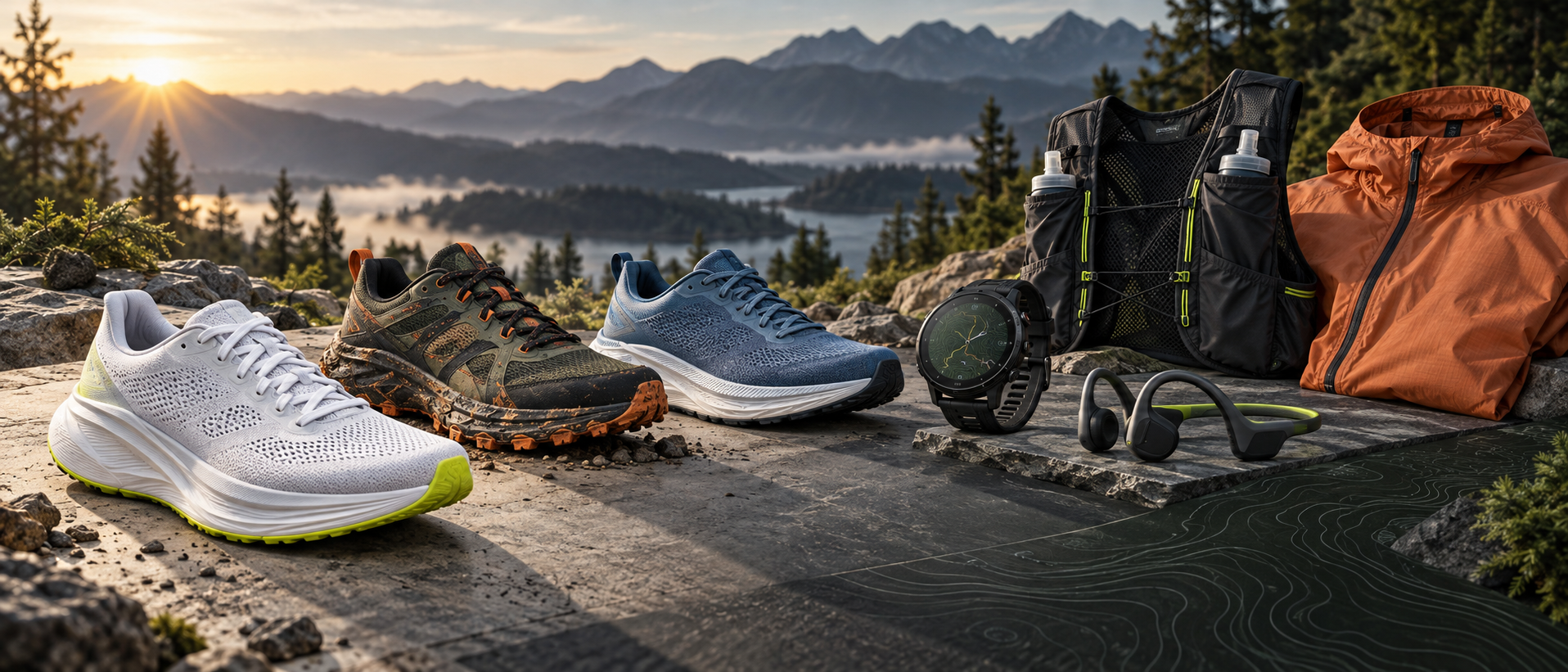
i-Run is a useful starting point when one shopping trip needs to cover road running, trail, hiking, watches and fitness. The French retailer groups those disciplines in one catalogue, carries more than 200 brands and gives shoppers practical filters such as surface, stability, intended use, runner weight and shoe weight. That makes it easier to compare a soft daily trainer with a technical trail shoe without pretending they solve the same problem.
This 10Best comparison uses the products and specifications visible on i-Run at the time of research in July 2026. It is not a sponsored ranking and “best” means best for a particular use case. Prices, colourways and stock can change, so use the buttons below to confirm current details before ordering.
*Editorial image created for this guide; the arrangement is illustrative and is not a product photograph.*
Link note: The partner URL supplied for this brief currently redirects to Fenty Beauty rather than i-Run. It is included exactly as provided for tracking transparency; use the direct i-Run button above for i-Run shopping.
i-Run 10Best Comparison at a Glance
| Product | Best for | Discipline | What stands out |
|---|---|---|---|
| Hoka Speedgoat 7 | Trail grip | Trail | Deep-lugged confidence on technical ground |
| Asics Gel-Nimbus 28 | Plush road miles | Road | Protective, high-stack cushioning |
| Asics Novablast 5 | Daily versatility | Road / trail | Springy ride and strong value |
| Hoka Bondi 9 | Maximum cushioning | Road | Smooth comfort for long, easy sessions |
| Nike Vomero 18 | Soft long runs | Road / trail | Cushioned training feel with a lively transition |
| Salomon Ultra Glide 4 | Long trail days | Trail | Comfortable protection over changing terrain |
| Garmin Forerunner 265 Music | Structured training | Running / triathlon | AMOLED display, music and training metrics |
| COROS Pace 4 Crystal | Battery life | Running / multisport | Lightweight design and up to 41 hours of GPS |
| Shokz OpenRun Pro 2 | Open-ear audio | Training / commuting | Situational awareness without sealing the ear |
| Nike Pegasus 42 | One-shoe rotation | Road / trail | Familiar everyday platform at a moderate price |
How We Chose the 10 Best Products
We compared products across four practical dimensions: the session they suit, the kind of runner or athlete they serve, the feature that differentiates them and the compromise to understand before checkout. Shoes are not ranked by one universal score: a lightweight road trainer should not be judged by the same standard as a lugged trail shoe. Wear pattern, terrain, fit and injury history still matter more than a spec sheet.
1. Hoka Speedgoat 7 — Best Trail Grip
The Speedgoat 7 is the clearest pick for runners who want a trail shoe that feels ready for mud, rock and uneven climbs. i-Run lists it as a neutral trail model with a regular fit, a 4.2/5 customer score from 186 reviews and a listed weight of 264 g. Its identity is traction first: the outsole and protective upper are designed to keep the foot secure when the route stops being predictable.
Compared with the rest: It offers more technical confidence than a road-to-trail hybrid such as the Pegasus 42 and a more aggressive stance than the cushioned Bondi 9. The trade-off is a less natural feel on pavement and a fit that may feel too structured for runners who prefer flexible, low-profile trail shoes.
Choose it if: your weekly routes include roots, loose gravel, wet descents or steep climbs. For mostly asphalt, the Novablast 5 will feel faster and quieter.
2. Asics Gel-Nimbus 28 — Best Plush Road Cushioning
The Gel-Nimbus 28 is the comfort specialist in this list. i-Run lists it for road and trail use, intensive training, a regular fit and a 266 g weight, with a 4.7/5 score from 200 reviews. The shoe is built for runners who would rather finish a long run feeling protected than chase the lightest possible setup.
Compared with the rest: It feels softer and more protective than the Novablast 5, while staying more conventional and versatile than a maximal trail shoe. The Bondi 9 is the alternative when maximum stack and a very stable, rolling feel matter more than a slightly livelier response.
Choose it if: recovery runs, long steady miles and forgiving landings are the priority. Runners who want snappy intervals may find it more shoe than they need.
3. Asics Novablast 5 — Best Versatile Daily Trainer
The Novablast 5 is the balanced recommendation for a runner who wants one pair to handle most of the week. The i-Run listing shows road/trail versatility, a regular fit, 243 g and a 4.8/5 customer score from 474 reviews. It combines enough cushioning for easy mileage with a springier transition that does not feel out of place on a faster day.
Compared with the rest: It is more energetic than the Gel-Nimbus 28 and less specialised than the Speedgoat 7. The Pegasus 42 is the more familiar, traditional option; the Novablast 5 feels more deliberately tuned for a bouncy, modern ride.
Choose it if: you want a first serious daily trainer, a travel pair or a shoe that can move from relaxed miles to progression runs. Its road/trail label should not be read as a replacement for a true technical trail outsole.
4. Hoka Bondi 9 — Best Maximum Cushioning
For runners who value a smooth, protective platform above all else, the Bondi 9 is the comfort anchor. i-Run lists it for road and trail use with intensive usage, a regular fit, 284 g and a 4.8/5 score from 611 reviews. The higher-volume construction gives easy days a relaxed rhythm and helps reduce the feeling of repeated impact.
Compared with the rest: It is more cushioned and more deliberate than the Novablast 5, but less nimble than the Nike Vomero 18. It suits long walks and standing jobs too, although the bulk that creates comfort can feel cumbersome during quick workouts.
Choose it if: your priority is dependable softness for easy running, recovery or all-day wear. If you want a lighter, more playful ride, start with Novablast 5.
5. Nike Vomero 18 — Best Soft Long-Run Road Shoe
The Vomero 18 brings a softer, plush training personality while keeping a familiar road-shoe shape. i-Run lists the model for road and trail use, intensive sessions, a 292 g weight and a 4.8/5 score from 211 reviews. It is a sensible bridge for runners who want comfort but do not want the tall, heavily rockered feeling of a maximal shoe.
Compared with the rest: It is a little more lively than the Bondi 9 and more cushioned than the Pegasus 42. The trade-off is weight: this is a long-run and easy-day option, not the obvious choice for track repeats or race day.
Choose it if: your training calendar is built around steady mileage and you like a soft landing with a recognisable Nike fit. Check the upper volume carefully if you have a narrow heel.
6. Salomon Ultra Glide 4 — Best for Long Trail Distance
The Ultra Glide 4 is the trail-distance pick when comfort over many hours matters as much as grip. i-Run lists it as a 267 g trail shoe with a 4.7/5 score from 91 reviews. Its purpose is to make varied terrain feel manageable rather than to deliver the most aggressive, race-focused connection to the ground.
Compared with the rest: It is a more distance-oriented alternative to the Speedgoat 7. The Hoka is the stronger choice for technical traction; the Salomon is appealing when the route mixes forest paths, compact dirt and long rolling sections.
Choose it if: you are planning ultra-distance training, long hikes or trail days where feet swell and protection becomes increasingly valuable. As always, test the lacing and toe-box volume before committing to an all-day event.
7. Garmin Forerunner 265 Music — Best Structured-Training Watch
The Forerunner 265 Music is the most complete training companion in this comparison. i-Run lists music playback, an AMOLED screen, multisport support and a price point in the mid-premium range. It is aimed at runners who want training load, workouts, recovery context and music in one watch rather than a simple step counter.
Compared with the rest: Garmin offers a richer training ecosystem than the minimalist COROS Pace 4 Crystal, while the COROS wins on simplicity and battery. The 265 Music makes the most sense if you will actually use guided workouts, health trends and phone-free audio.
Choose it if: you are following a structured plan, training for a race or moving between running and triathlon. Confirm phone compatibility, music-service support and strap size before ordering.
8. COROS Pace 4 Crystal — Best Battery and Low Weight
The COROS Pace 4 Crystal is the value-minded watch recommendation for athletes who want long battery life without a bulky wrist computer. i-Run lists up to 41 hours of GPS use and up to 19 days of daily use. That endurance is especially useful for ultra training, travel and runners who dislike charging after every session.
Compared with the rest: It is lighter and more focused than the Garmin Forerunner 265 Music, but the Garmin ecosystem is deeper for music, apps and lifestyle metrics. COROS is the cleaner choice when the watch is primarily a training instrument.
Choose it if: battery anxiety is your biggest frustration, you want clear workout data and you prefer a lighter watch on small wrists. Verify navigation and sensor needs if your training requires advanced mapping.
9. Shokz OpenRun Pro 2 — Best Open-Ear Audio
The OpenRun Pro 2 is the accessory that solves a different problem: enjoying audio without blocking the environment. i-Run lists up to 12 hours of battery life and an open-ear design that leaves the ear canal open. That is useful for city running, group sessions, commuting and any route where hearing cyclists, traffic or a training partner matters.
Compared with the rest: Unlike in-ear earbuds, the Shokz design is built around awareness and comfort rather than total isolation. Sound will not feel as immersive as a sealed earbud, and noisy roads can still overpower podcasts or quiet music.
Choose it if: safety and awareness matter more than studio-style isolation. Keep volume moderate and treat it as a training accessory, not a substitute for paying attention to your surroundings.
10. Nike Pegasus 42 — Best One-Shoe Rotation
The Pegasus 42 is the familiar all-rounder for runners who want a straightforward road shoe that can also cover occasional compact paths. i-Run lists it for road and trail use, with a regular fit and a lower price tier than the premium cushioned models above. It is the least specialised shoe here—and that is exactly why it belongs in a 10Best list.
Compared with the rest: The Pegasus 42 is less plush than Bondi 9, less bouncy than Novablast 5 and less protective on rough trails than Speedgoat 7. In exchange, it is easy to understand, easy to rotate and well suited to mixed weekly training.
Choose it if: you are buying one dependable pair for commuting, treadmill sessions, short runs and everyday errands. If your mileage is mostly long and slow, spend up on the Gel-Nimbus 28 or Bondi 9 instead.
Which i-Run Product Should You Buy?
For a single road-running shoe, the Novablast 5 is the most balanced starting point. Choose the Gel-Nimbus 28 or Bondi 9 when protection is the deciding factor, and the Pegasus 42 when you want a familiar, lower-commitment rotation. Trail runners should separate terrain from mileage: Speedgoat 7 for technical grip, Ultra Glide 4 for long mixed-terrain comfort.
For electronics, Garmin is the better fit for structured plans and an integrated music-and-training ecosystem. COROS is the cleaner battery-first choice. Add the Shokz OpenRun Pro 2 when environmental awareness is part of your route planning.
Before checkout, confirm the i-Run size chart, return conditions, current price and stock. The retailer’s filters are a helpful shortlist, but your route, foot shape and training load should make the final call.